Cultural Resource Planning
Preservation Planning
Historic places often play a key role in defining the character and sense of identity for a local community. Preservation planning is the broad principal component that is essential to the effective management and treatment of cultural resources. Historic resources and archeological sites are critical elements of the cultural environment, and planners and others recognize the importance of heritage resources to community planning.
Historic preservation often intersects with other planning issues: economic development, affordable housing, revitalization of downtown areas, neighborhood conservation, environmental management, hazard mitigation, tourism, and transportation planning, all of which seek to manage growth and development while maintaining the unique character of a local area.
Historic Cemetery Inventory Project, Historic Preservation Section, Prince George’s County Planning Department
The Ottery Group assisted the Maryland-National Capital Park and Planning Commission with the inventory of 49 historic cemeteries throughout Prince George’s County, Maryland. Site visits were conducted to complete photographic documentation, record headstone inventories, and to assess the condition and character-defining features retained by each cemetery. Extensive archival research was completed for each cemetery property to document historic land ownership and usage, and to collect genealogical information in order to identify possible unmarked burials associated with the cemetery. Maryland Inventory of Historic Places forms were completed for each cemetery. The inventory included large institutional cemeteries and church burying grounds, and numerous rural, small family cemeteries associated with 18th, 19th, and 20th century contexts throughout the county. The project allowed the MNCPPC to identify circumstances in which county tax maps incorrectly attributed ownership of cemeteries in which the cemetery parcels were actually excluded from past land sales, and was part of a broader effort to improve the county’s management of cemetery properties.
Section 106 Compliance, Planning, and Cultural Resource Services for the Meadows Campus at Princeton University, Princeton, NJ
The Ottery Group served as the cultural resource consultant to Princeton University for the 200-acre West Windsor Meadows, a broad campus expansion to support academic partnerships, graduate student housing, varsity athletics, recreational uses, and campus parking. The firm coordinated consultation with the New Jersey SHPO, as well as local, county, and other state agencies that had jurisdiction for development review. A range of historic properties were identified and evaluated, including the Washington Road Elm Allee, the Penns Neck Cemetery, and a number of archeological sites associated with the eighteenth and nineteenth century agricultural history of the area. Master Planning and Resource Management
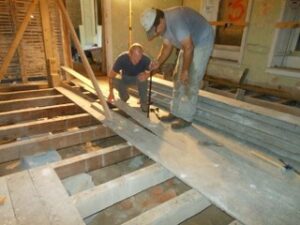
Archeology and architectural history utilize complementary methods to provide a comprehensive understanding of the built environment. Both technical specialties contribute to the interpretation of how people have planned, used, and modified buildings and associated landscapes. Historic architectural analysis can be used to document hidden features of a building in order to detail the construction and evolution of a building over time.
Archeology contributes to the architectural documentation of a historic building through the analysis of remnant architectural features and the documentation of landscape modifications which can inform the preservation planning process.
Biscoe Gray Heritage Farm Master Plan, Calvert County, MD
The firm completed a prime contract with the Calvert County Department of Planning and Zoning to develop a master plan for the Biscoe Gray Heritage Farm. Poole Design served as the subcontractor. The 196-acre tract was a historic tobacco farm from the 18th through 21st centuries and contained significant historic and archeological resources. The master plan provided for the preservation and interpretation of prehistoric and historic archeological resources, restoration of a variety of historic structures; the creation of demonstration plots for historic tobacco farming and sustainable agricultural practices, the development of educational programs and interpretive exhibits, and, the accommodation of user amenities such as horse trails, camping areas, nature walks, a boat launch, community gardening, and other public facilities.Master Planning for Walker Mill Regional Park, Prince George’s County, Maryland
The Ottery Group served as the cultural resource consultant on a team led by LSG Landscape Architecture to develop a Master Development Plan for Walker Mill Regional Park (WMRP). The planning effort for WMRP involved an extensive public engagement process to understand community needs, a detailed site analysis and examination of technical studies that guided the County’s vision for this site. Focus groups held during the planning phase identified history and culture as the most important community concern, identifying the importance of educating the public about the history of the property while accommodating park accessibility, community needs, and recreational needs. The northern portion of the park includes the historic Concord manor house and grounds, which are protected by preservation easements. The ongoing renovation of this 18th century Federal-style dwelling will create spaces than can be used for events and community meetings. Archeological and geophysical investigations were conducted to inform the ongoing planning process associated with the master planning effort at WMRP and also for the restoration of the Concord manor house.Archeological Assessments for the Department of Veteran’s Affairs, Nationwide
The Ottery Group participated in a pilot program sponsored by the National Park Service and the National Preservation Institute (NPI), in direct coordination with the U.S. Department of Veterans Affairs, to complete archeological assessments of historic VA facilities in Idaho, Iowa, and Louisiana. The VA campus in Washington, DC was later added. The Ottery Group prepared historical contexts for the campuses and compiled information on known and potential archeological resources at each facility. The project goal was to develop guidance regarding the VA’s responsibilities under Section 110 of the NHPA to ensure adequate protections of archeological resources.Department of Homeland Security Headquarters Consolidation at St. Elizabeth’s Campus, Washington, DC
The Ottery Group served on a team led by Leo A. Daly Corporation involved in Master Plan updates and the preparation of an Environmental Impact Statement (EIS) for the planned redevelopment of the historic St. Elizabeth’s Hospital Campus as the consolidated headquarters for DHS, FEMA, and US Coast Guard. Specific responsibilities included the preparation of natural resource assessments for the campus, preparation of portions of the Master Plan and EIS, and participation in planning meetings, coordination meetings, stakeholder meetings, and public hearings regarding the project.Section 106 Compliance, Cultural Resource Planning, and Technical Services for Various Projects Under the Master Plan at Princeton University, Princeton, NJ
The Ottery Group served as the cultural resource consultant to Princeton University for several campus projects, including maintenance dredging of a portion of Lake Carnegie, the renovation of Forbes College, construction of a pedestrian path and flyover crossing Lake Carnegie and the Delaware and Raritan Canal, construction of Athletic Operations facilities, roadway expansion, and stormwater basin improvement. Each project involved the preparation of consultation documents, coordination of archeological and historic preservation assessments, permitting, and the provision of expert testimony for local municipal historic preservation commission meetings as well as the Delaware and Raritan Canal Commission. Technical work included documenting archeological sites, historic buildings, and historic landscapes, followed by evaluation of these resources and the avoidance, minimization, or mitigation of direct and indirect effects by the planned projects.Comprehensive Cultural Resource Surveys
Planned development projects are often required to consider the effects of the undertaking on cultural resources by the National Historic Preservation Act, as well as state and local counterpart regulations. Section 106 of the NHPA requires federal agencies to consider the effects of federally licensed or funded projects on historic resources. The Section 106 process has four steps: 1) initiate the process, identify consulting parties, and establish the area of potential effect, 2) identify and evaluate historic properties that might be affected by the planned undertaking, 3) assess the effects to significant historic properties, and 4) resolve adverse effects through avoidance, minimization, or the mitigation of impacts to the resource. In addition, Section 110 of the NHPA requires all federal agencies to identify, evaluate, and protect historic properties under their ownership or control. The National Environmental Policy Act (NEPA) is another key procedural statute that requires federal agencies to evaluate the environmental, social, and economic impacts of proposed actions before making a final decision on the planned action. Each State Historic Preservation Office (SHPO) has standards and guidelines for cultural resource survey, evaluation, and treatment projects. There are also professional qualifications standards for the various technical specialties that support comprehensive cultural resource investigations.
Historic Cemetery Inventory Project, Historic Preservation Section, Prince George’s County Planning Department
The Ottery Group assisted the Maryland-National Capital Park and Planning Commission with the inventory of 49 historic cemeteries throughout Prince George’s County, Maryland. Site visits were conducted to complete photographic documentation, record headstone inventories, and to assess the condition and character-defining features retained by each cemetery. Extensive archival research was completed for each cemetery property to document historic land ownership and usage, and to collect genealogical information in order to identify possible unmarked burials associated with the cemetery. Maryland Inventory of Historic Places forms were completed for each cemetery. The inventory included large institutional cemeteries and church burying grounds, and numerous rural, small family cemeteries associated with 18th, 19th, and 20th century contexts throughout the county. The project allowed the MNCPPC to identify circumstances in which county tax maps incorrectly attributed ownership of cemeteries in which the cemetery parcels were actually excluded from past land sales, and was part of a broader effort to improve the county’s management of cemetery properties.
Section 106 Compliance, Planning, and Cultural Resource Services for the Meadows Campus at Princeton University, Princeton, NJ
The Ottery Group served as the cultural resource consultant to Princeton University for the 200-acre West Windsor Meadows, a broad campus expansion to support academic partnerships, graduate student housing, varsity athletics, recreational uses, and campus parking. The firm coordinated consultation with the New Jersey SHPO, as well as local, county, and other state agencies that had jurisdiction for development review. A range of historic properties were identified and evaluated, including the Washington Road Elm Allee, the Penns Neck Cemetery, and a number of archeological sites associated with the eighteenth and nineteenth century agricultural history of the area. Integrated Archeological and Historical Studies
Cultural resource investigations for federally licensed or funded projects are generally required by Section 106 of the National Historic Preservation Act, while cultural resource investigations for other types of development projects are typically required under state and local counterpart regulations. The Ottery Group provides a range of cultural resource management services for development projects. The Ottery Group’s professional staff provides expert technical services to reconcile the conservation of cultural resources with the needs of federal, state, and local undertakings. The Ottery Group has the technical expertise and experience to implement compliance-related projects to document archeological sites and historic standing structures as required by the National Historic Preservation Act as well as state and local counterpart regulations. The Ottery Group staff has conducted numerous cultural resource investigations for public and private clients throughout the eastern United States.
Archeological Investigations Associated with the Melwood Parke Historic Site Rehabilitation Project
The Ottery Group completed a series of archeological investigations at the National Register-listed Melwood Parke (18PR225), an 18th-century plantation located in Upper Marlboro, Maryland. The purpose of the investigations was to assess the extent and condition of intact archeological features and deposits adjacent to the house foundations that could be impacted by the efforts to stabilize the structure, as well as to provide archeological and architectural data pertaining to the history of construction and modifications to the house. The investigations revealed that the foundations beneath the house depict different phases of construction and modifications extending from ca. 1714 until the house attained its present dimensions in 1768. The foundations thus contain a varied and valuable record of the dwelling’s architectural history, which enhanced the understanding of above-grade portions of the building.
Historic Preservation Services for the Restoration of the Rich Hill Historic Site
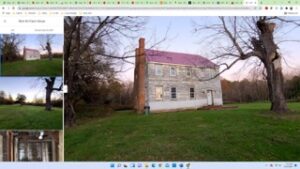
The Ottery Group completed long-term work associated with the stabilization and restoration of the Rich Hill historic site in Bel Alton, Maryland for the Charles County Department of Planning. Rich Hill, constructed ca. 1740, is listed in the National Register of Historic Places for its association with the John Wilkes Booth escape route among other notable historic associations. The firm was contracted to complete a comprehensive preservation study of the property, including a historic structures report (HSR), a stabilization plan, and archeological and geophysical investigations of the landscape surrounding the Rich Hill manor house. To respond to the needs of the county, The Ottery Group organized a team of experts in preservation architecture, structural engineering, and geophysical surveying to provide a suite of technical services as part of this effort. The investigation has documented evidence of both structural change in the configuration of space and substantial modification of the landscape at Rich Hill.
Phase I and Phase II Archeological Investigations at Thompson AME Zion Church, Harriet Tubman Historical Park (HART), Auburn, New York
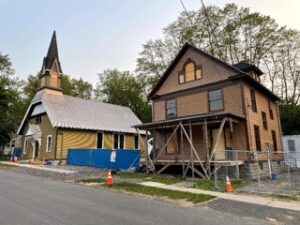
The Ottery Group conducted an archeological investigation at the AME Thompson Memorial Church and associated parsonage in partnership with Harriet Tubman National Historical Park (HART). The Thompson Memorial AME Zion Church was designated a National Historic Landmark in 2001 for its association with American abolitionist and political activist Harriet Tubman. The archeological investigation was designed to document and evaluate archeological resources on the church property prior to the rehabilitation and restoration of the buildings as well as the installation of utilities and landscape features on the property. Archeological monitoring was also conducted during demolition activities within the cellar as well as areas on the exterior of the church and parsonage that were considered archeologically sensitive.
Impact Planning/Mitigation Planning
An adverse effect occurs when a project will alter the specific character-defining features of a historic property that convey the significance of the property. Treatment options for resolving adverse effects to historic properties include avoidance, minimization of impacts, and mitigation. If alternatives to avoid or reduce adverse effects to historic properties are determined by the consulting parties to not be feasible, agencies or regulated entities are generally required to develop measures to mitigate the adverse effects. Mitigation involves offsetting the loss of a historic property. Mitigation efforts may include the restoration of impacted sites, intensive-level documentation of historic properties, or occasionally off-site preservation or interpretation efforts that benefit the local community affected by a development project. For significant archeological resources, data recovery is often conducted to realize the research potential that is lost with the site’s destruction.
Archeological Investigations Associated with the Melwood Parke Historic Site Rehabilitation Project
The Ottery Group completed a series of archeological investigations at the National Register-listed Melwood Parke (18PR225), an 18th-century plantation located in Upper Marlboro, Maryland. The purpose of the investigations was to assess the extent and condition of intact archeological features and deposits adjacent to the house foundations that could be impacted by the efforts to stabilize the structure, as well as to provide archeological and architectural data pertaining to the history of construction and modifications to the house. The investigations revealed that the foundations beneath the house depict different phases of construction and modifications extending from ca. 1714 until the house attained its present dimensions in 1768. The foundations thus contain a varied and valuable record of the dwelling’s architectural history, which enhanced the understanding of above-grade portions of the building.
Historic Preservation Services for the Restoration of the Rich Hill Historic Site
The Ottery Group completed long-term work associated with the stabilization and restoration of the Rich Hill historic site in Bel Alton, Maryland for the Charles County Department of Planning. Rich Hill, constructed ca. 1740, is listed in the National Register of Historic Places for its association with the John Wilkes Booth escape route among other notable historic associations. The firm was contracted to complete a comprehensive preservation study of the property, including a historic structures report (HSR), a stabilization plan, and archeological and geophysical investigations of the landscape surrounding the Rich Hill manor house. To respond to the needs of the county, The Ottery Group organized a team of experts in preservation architecture, structural engineering, and geophysical surveying to provide a suite of technical services as part of this effort. The investigation has documented evidence of both structural change in the configuration of space and substantial modification of the landscape at Rich Hill.
Phase I and Phase II Archeological Investigations at Thompson AME Zion Church, Harriet Tubman Historical Park (HART), Auburn, New York
The Ottery Group conducted an archeological investigation at the AME Thompson Memorial Church and associated parsonage in partnership with Harriet Tubman National Historical Park (HART). The Thompson Memorial AME Zion Church was designated a National Historic Landmark in 2001 for its association with American abolitionist and political activist Harriet Tubman. The archeological investigation was designed to document and evaluate archeological resources on the church property prior to the rehabilitation and restoration of the buildings as well as the installation of utilities and landscape features on the property. Archeological monitoring was also conducted during demolition activities within the cellar as well as areas on the exterior of the church and parsonage that were considered archeologically sensitive.
Historic Resource Management on Contaminated Properties
The Ottery Group staff has regularly been consulted on issues related to historic preservation prior to the remediation of contamination within historic buildings or on historic properties. As a full-service environmental consulting firm, The Ottery Group is uniquely suited to provide technical services that require well-rounded expertise in multiple disciplines.
Typical projects include providing technical assistance during lead abatement or asbestos removal projects or preparing adaptive re-use plans for historic buildings on contaminated properties that are being redeveloped under various brownfields initiatives. Staff performing on-site activities meet the OSHA-required 40-hour hazardous site worker health and safety training with annual re-certification.
Archeological Survey for a Planned Lead Shot Remediation Project at Prime Hook National Wildlife Refuge, Milton, Delaware
The Ottery Group completed an archeological survey of the limits of disturbance associated with a planned lead remediation project within the Prime Hook National Wildlife Refuge in Milton, Delaware. The project area encompassed approximately 8.6 acres of wetland and forested upland that was contaminated from over 40 years of concentrated lead shot from an adjacent Sportsman’s Club. The lead shot resulted in the contamination of refuge wetlands, with acidic water mobilizing lead into the sandy aquifer. The testing strategy consisted of the excavation of a total of 268 STPs in a staggered 8-meter interval grid. The project was conducted under contract with the United States Fish and Wildlife Service.
Alban Towers Restoration Project, Washington, DC
The Ottery Group served as the lead preservation consultant to Charles E. Smith Residential Realty during the lead paint abatement at a 132-unit historic apartment building opposite the National Cathedral in Washington, DC. The project involved coordination between the DC SHPO and project managers to develop a lead paint abatement plan for the windows that retained the historic character of the exterior façade and maintained the ability to recoup project costs through historic preservation tax credits.National Park Seminary Redevelopment Project, Forest Glen, MD
The Ottery Group Served as a technical consultant to a team led by the Alexander Companies that was engaged in the redevelopment of the NR-listed National Park Seminary, a former school campus that was acquired in the 1940s by the Army as an annex to the Walter Reed Hospital and later declared as surplus and transferred to Montgomery County, MD. The project involved the preparation of tax credit applications that were used to finance the restoration or rehabilitation of various buildings on the campus as well as consultation with project managers regarding the implementation of lead paint and asbestos remediation efforts while preserving the greatest extent of the historic materials as possible.Warner Mansion Adaptive Re-Use, Kensington, Maryland
The Ottery Group assisted Washington Landmark Construction with the adaptive re-use of the Brainard Warner Mansion (M:31-41), located on a 4.5-acre portion of the Warner Circle Special Park. The county-owned park property is within the Kensington Historic District, which encompasses the 1890s subdivisions, built by Brainard Warner, that defined the town. Washington Landmark Construction acquired the buildings and planned the renovation and adaptive reuse of Warner Mansion as residential condominiums. The Ottery Group provided technical assistance for the appropriate treatment of the historic buildings for the building owners, architects, contractors, and project reviewers. The Ottery Group also completed an archeological identification survey for the area surrounding Brainard Warner Mansion that would be impacted by the redevelopment. The scope of work also included Phase I Environmental Site Assessment (ESA) following applicable ASTM guidance (E1527) to identify and assess potential environmental conditions or impairments on the property.